
How to tell when a bra truly fits
A good fit is not about feeling tight. It stays comfortably in place when you stand, sit and raise your arms—so naturally that you almost forget it is there.
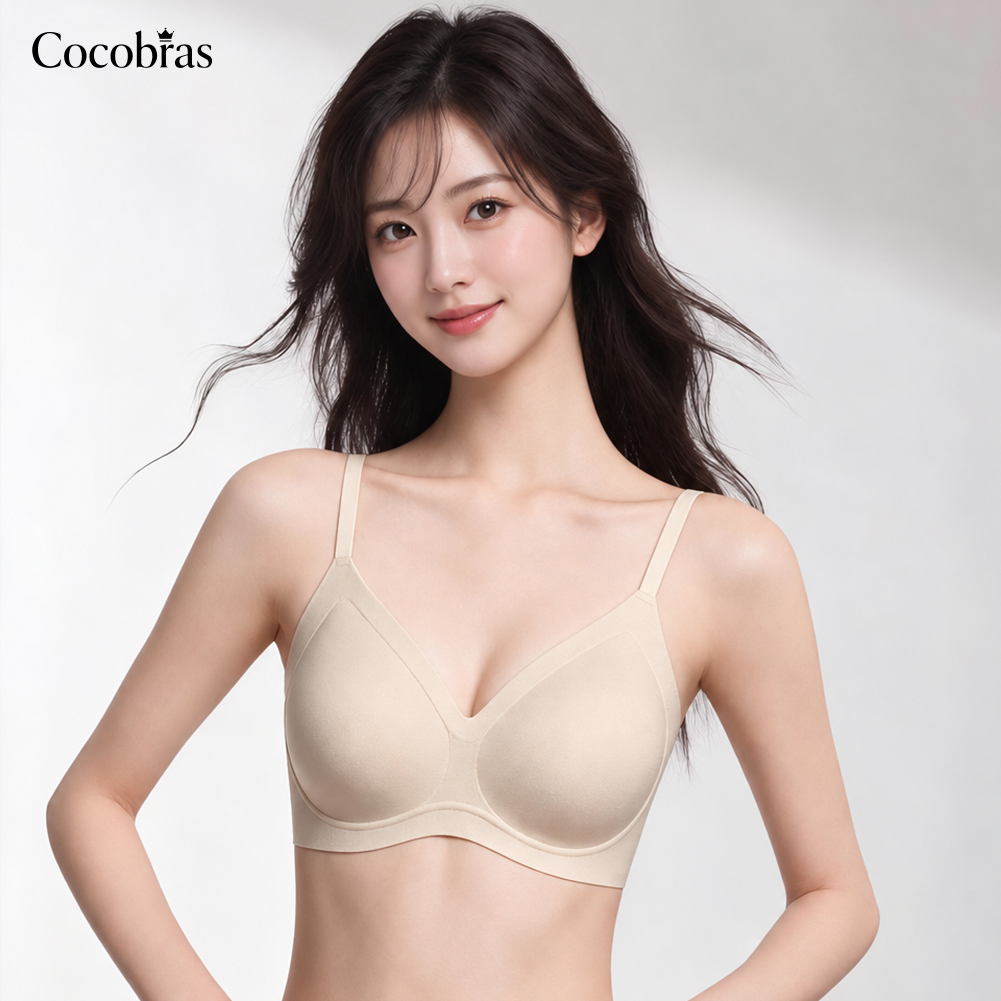
A truly well-fitting bra distributes pressure across the band, cups and straps. Do not judge it only from the front of a mirror; notice what changes after you move.
Comfort does not mean loose, and support does not mean tight. Fit is the right balance between body and structure.
Start with the band: level, stable and never restrictive
The band provides most of the support. It should remain level with the floor and stay put when you lift your arms or turn. Two fingers should fit beneath it; deep marks, restricted breathing or a band that rides up signal that the size needs adjusting.
- The back band sits level with the front
- It stays in place after movement
- Two fingers fit without the band feeling loose
The cups should contain the bust without gaps or spillover
The bust should settle naturally into the centre of each cup, with a smooth cup edge. Bulging usually means the cup is too small; gaps after bending or moving can mean it is too large or the shape is not right for you.
- The cup edge lies smoothly against the skin
- No pinching around the underarm or cup edge
- The centre panel rests naturally against the body
Straps assist support; they should not carry it alone
You should be able to slide one or two fingers beneath each strap. If they leave deep marks, check whether the band is too loose before tightening them. Natural asymmetry is common, so adjust each side separately.
- Straps neither slip nor leave deep marks
- Each side can be adjusted independently
- Shoulders and neck remain relaxed after hours of wear
Measure your underbust and full bust, then check the fit again while moving.
View the size guide